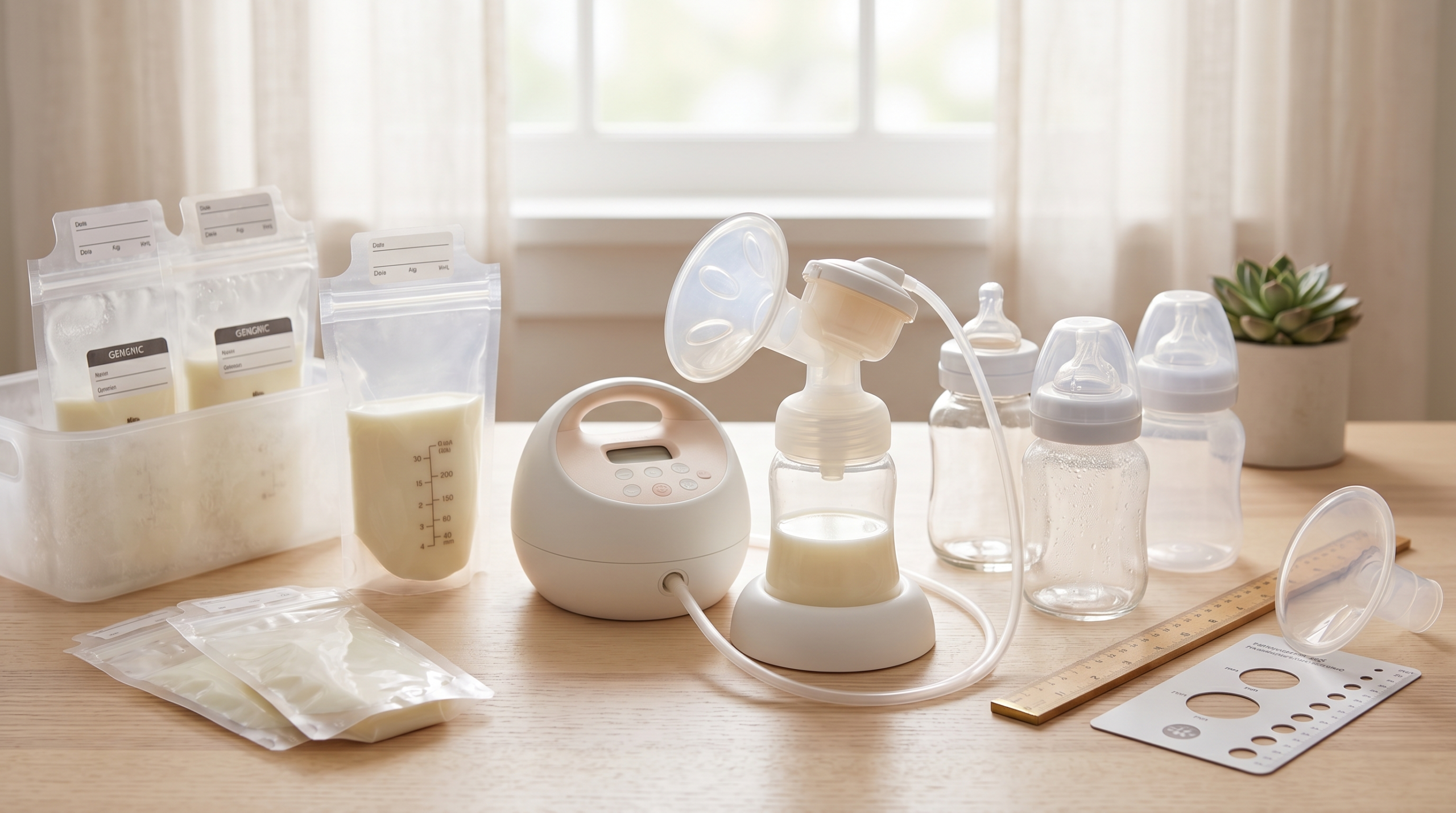
The Ultimate Guide to Breast Pumping: Science, Schedules, and Supply
Whether you are returning to work, building a freezer stash, exclusively pumping, or simply looking for some occasional relief, breast pumping is a profound labor of love. It is also a science. Understanding the biological mechanisms of lactation, mastering the mechanics of your pump, and establishing the right routine are the keys to a successful and stress-free pumping journey.
In this comprehensive, evidence-based guide, we will explore everything you need to know about breast pumping. From the physiology of milk production to establishing exclusive pumping schedules, managing flange sizing, and eventually weaning from the pump, this document is designed to be your ultimate resource.
💡 Pro Tip: Bookmark this page! It contains an interactive calculator and intake chart you can return to throughout your pumping journey.
1. The Physiology of Pumping: How Your Body Makes Milk
To pump effectively, you first need to understand how your body produces and releases milk. Breast milk production operates on a strict system of supply and demand, governed by two primary hormones: Prolactin and Oxytocin.
Prolactin: The Milk Maker
Prolactin is the hormone responsible for producing milk. Every time milk is removed from the breast (either by a baby or a pump), prolactin levels rise, signaling the body to make more milk. If milk is left in the breast, a protein called Feedback Inhibitor of Lactation (FIL) builds up, signaling the brain to slow down production.
Oxytocin: The Milk Deliverer (The Let-Down)
While prolactin makes the milk, oxytocin pushes it out. This is known as the Milk Ejection Reflex (MER) or the “let-down.” When you stimulate the nipple, oxytocin causes the tiny muscles around the milk-producing glands (alveoli) to contract, squeezing milk into the ducts.

Why this matters for pumping: A breast pump is inherently less efficient at triggering oxytocin than a nursing baby. If you are struggling with output, it is often a let-down issue, not a production issue. To maximize pumping, you must trick your body into a let-down by looking at photos of your baby, using warm compresses, or utilizing the “massage/bacon” mode on your breast pump.
2. Maximizing Your Milk Supply
Whether you are exclusively pumping or pumping at work, maintaining supply is a common challenge. If you notice a dip in production, there are proven, science-backed methods to increase milk supply.
The Power of Frequency over Duration
Mothers often ask, “Should I pump for 45 minutes?” The answer is usually no. Pumping for 15 minutes every 2 hours is vastly more effective at increasing supply than pumping for 45 minutes every 5 hours. Frequent emptying prevents FIL (Feedback Inhibitor of Lactation) from building up.
Power Pumping
Power pumping is a technique designed to mimic a baby’s natural “cluster feeding” behavior during a growth spurt. It forcefully triggers rapid prolactin spikes. A standard power pumping session takes one hour. For a complete breakdown, read our Guide to Power Pumping.
| Action | Duration | Purpose |
|---|---|---|
| Pump | 20 minutes | Empty the initial milk volume and trigger main let-down. |
| Rest | 10 minutes | Allow ducts to begin refilling; rest breast tissue. |
| Pump | 10 minutes | Trigger a second let-down; signal demand for more milk. |
| Rest | 10 minutes | Brief recovery period. |
| Pump | 10 minutes | Final extraction to completely empty the breast. |
3. Managing Expectations: The Milk Intake Curve
A common misconception is that as babies grow, they need exponentially more breast milk (similar to how formula feeding works). However, breast milk changes in caloric composition rather than volume. As a result, a breastfed baby’s daily milk intake peaks around 1 month of age and stays remarkably consistent until they start solid foods at 6 months.
4. The Secret to Output: Flange Sizing
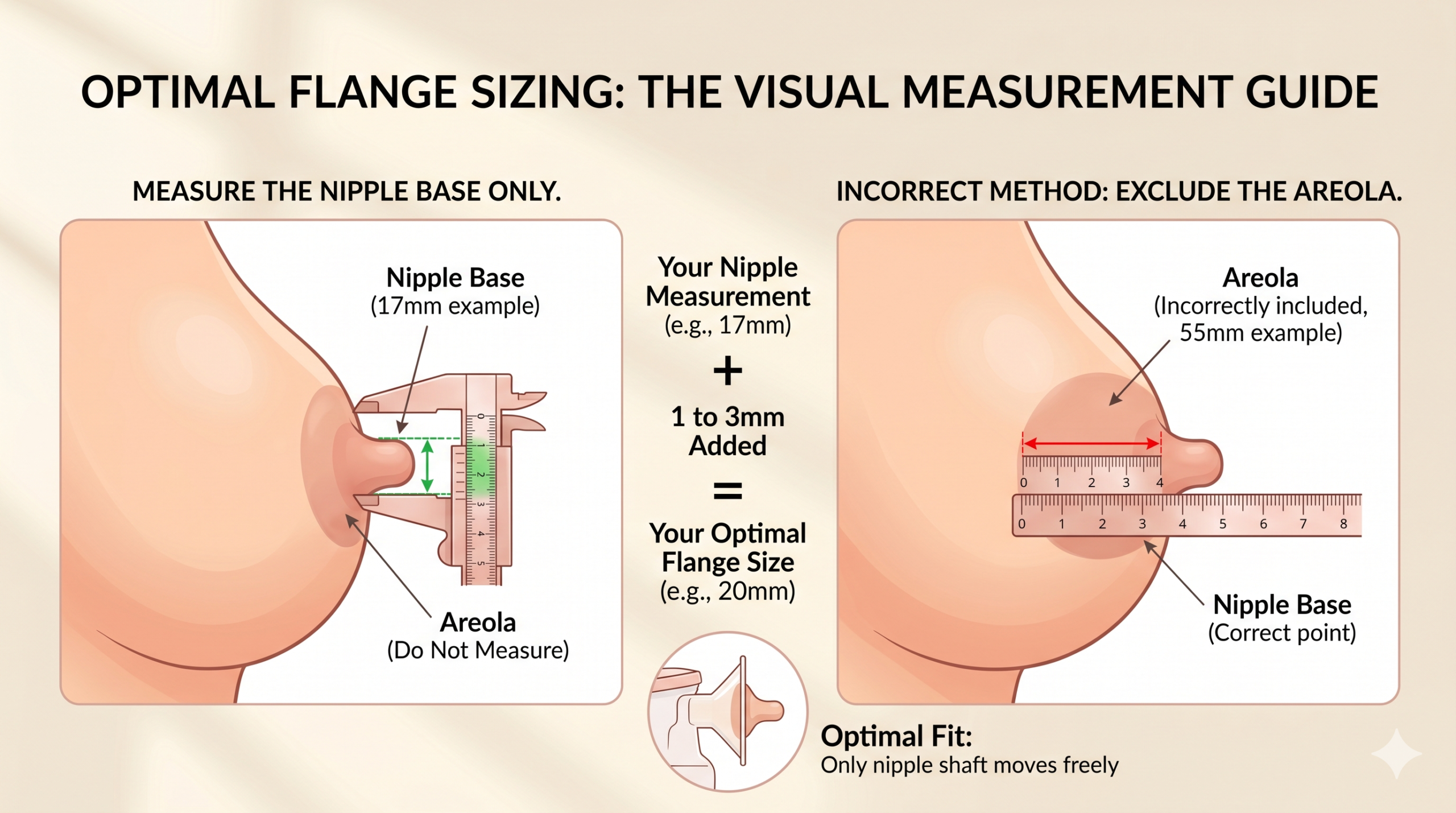
If you are experiencing pain while pumping, or if you feel like you are not emptying completely, the first thing to check is your flange size. The flange (or breast shield) is the plastic funnel that fits over your nipple. Studies show that up to 70% of pumping mothers use the wrong flange size, usually because they simply use the 24mm or 28mm shields that came free with their pump.
How to Measure
You measure the base of your nipple (excluding the areola) before pumping. Once you have your measurement in millimeters, add 1mm to 3mm to find your optimal flange size. Using a flange that is too large pulls the areola into the tunnel, causing swelling and pinched milk ducts. Using a flange that is too small causes friction and blisters.
Use our free Flange Sizing Calculator to instantly determine your exact size based on your measurements.
5. Safe Breast Milk Storage Guidelines
Once you’ve done the hard work of pumping the milk, storing it safely is paramount. Breast milk is a dynamic, living fluid packed with antibodies, live cells, and enzymes. Proper storage preserves these vital properties while preventing bacterial growth.
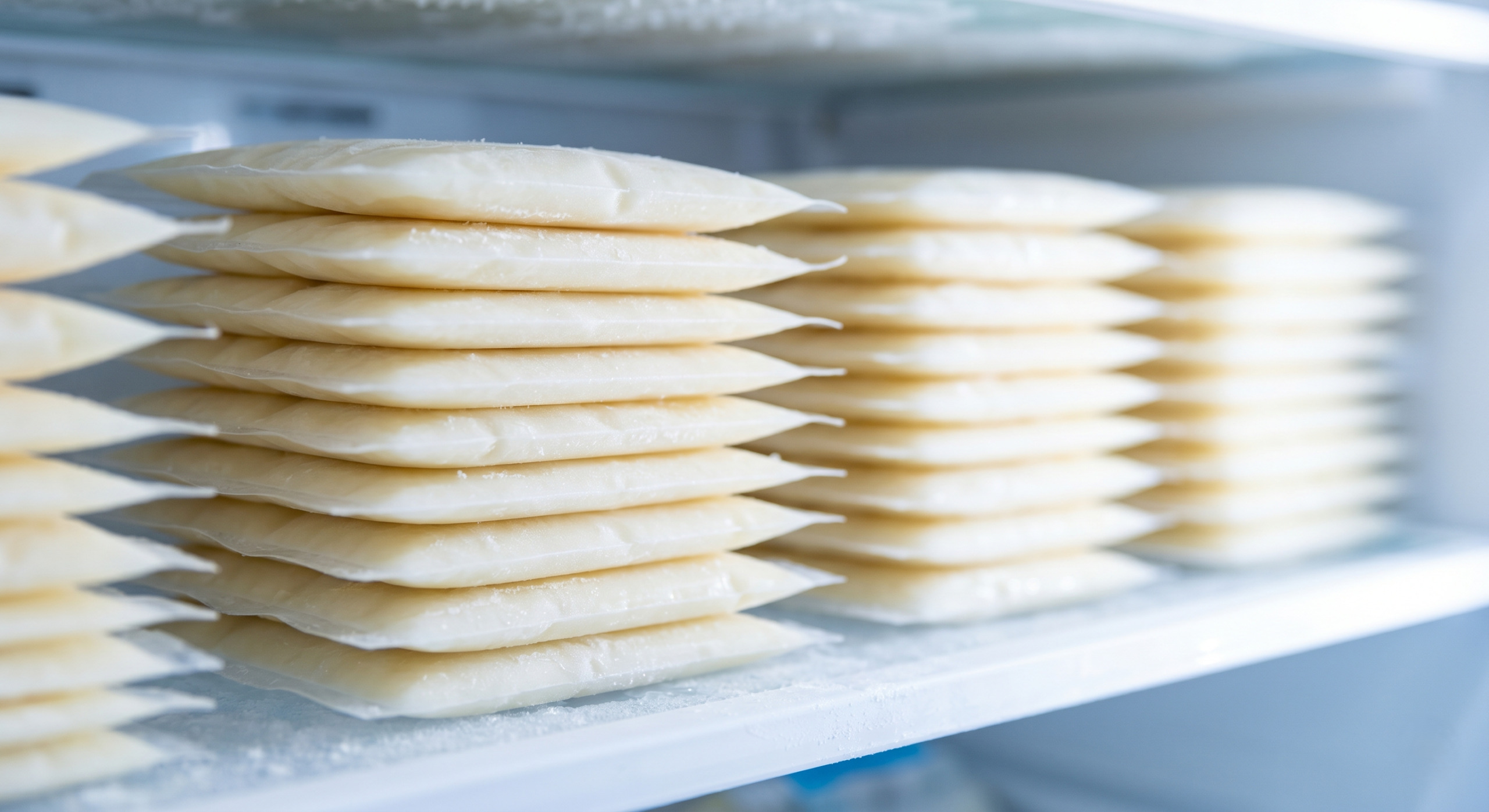
We recommend following the CDC’s “Rule of 4s” for freshly expressed breast milk. For a highly detailed breakdown, including how to handle thawed milk and high-lipase issues, visit our Safe Storage Guidelines.
| Storage Location | Temperature | Maximum Duration |
|---|---|---|
| Room Temperature | Up to 77°F (25°C) | 4 Hours (Optimal) |
| Insulated Cooler | With ice packs | 24 Hours |
| Refrigerator | 39°F (4°C) or colder | 4 Days (Optimal) |
| Standard Freezer | 0°F (-18°C) | 6 Months (Best) up to 12 Months |
6. Weaning from the Pump
When you are ready to stop pumping, you cannot simply quit cold turkey. Stopping abruptly signals the body to halt milk production immediately, but the milk currently stored in the breasts has nowhere to go, leading to severe engorgement, clogged ducts, and potentially mastitis.
The goal of weaning is to slowly down-regulate prolactin. You do this by gradually decreasing the demand. There are generally two methods to wean from the pump:
- Dropping Sessions: Eliminate one pumping session entirely every 3 to 5 days, starting with your mid-day pump.
- Shaving Time: Reduce the duration of every pumping session by 2-3 minutes every few days until the sessions are so short they can be eliminated entirely.
Frequently Asked Questions
Do I need to wash my pump parts after every single use?
The CDC recommends thoroughly washing pump parts with soap and warm water after every single use. While the “fridge hack” (placing unwashed parts in a sealed bag in the refrigerator between pumps) is popular among exclusively pumping moms to save time, it is not officially endorsed by health organizations, especially for premature or immune-compromised infants.
Why do I pump less milk in the afternoon and evening?
This is completely normal and biological. Prolactin levels peak in the early morning hours (typically between 1 AM and 5 AM), which is why your morning pumps yield the highest volumes. As the day progresses, prolactin levels naturally dip, resulting in lower pump volumes in the late afternoon and evening. The milk you produce in the evening, however, is often higher in fat content.
Can I mix breast milk from different pumping sessions?
Yes, you can pool breast milk from different sessions to create a full bottle or to freeze in a single bag. However, you must ensure both batches of milk are at the same temperature before mixing. Never add warm, freshly pumped milk directly to chilled fridge milk, as this can raise the temperature of the chilled milk and promote bacterial growth. Chill the fresh milk first, then combine.
What is “power pumping” and how often should I do it?
Power pumping is a technique designed to mimic a baby’s natural cluster feeding to rapidly increase milk supply. A typical session lasts an hour (20 mins pumping, 10 mins rest, 10 mins pumping, 10 mins rest, 10 mins pumping). It is generally recommended to replace one normal pumping session with a power pump session for 3 to 7 consecutive days. Doing it too often can lead to exhaustion and sore nipples.
How often should I replace my breast pump parts?
Pump parts degrade over time, which can significantly decrease your pump’s suction and, consequently, your milk output. Silicone parts like duckbill valves and backflow protectors should typically be replaced every 4 to 8 weeks, depending on how frequently you pump. Hard plastic parts like flanges and bottles usually only need to be replaced every 6 months or if they become visibly cracked or heavily scratched.